
How To Hike Juan De Fuca Trail In 3 Days On Vancouver Island
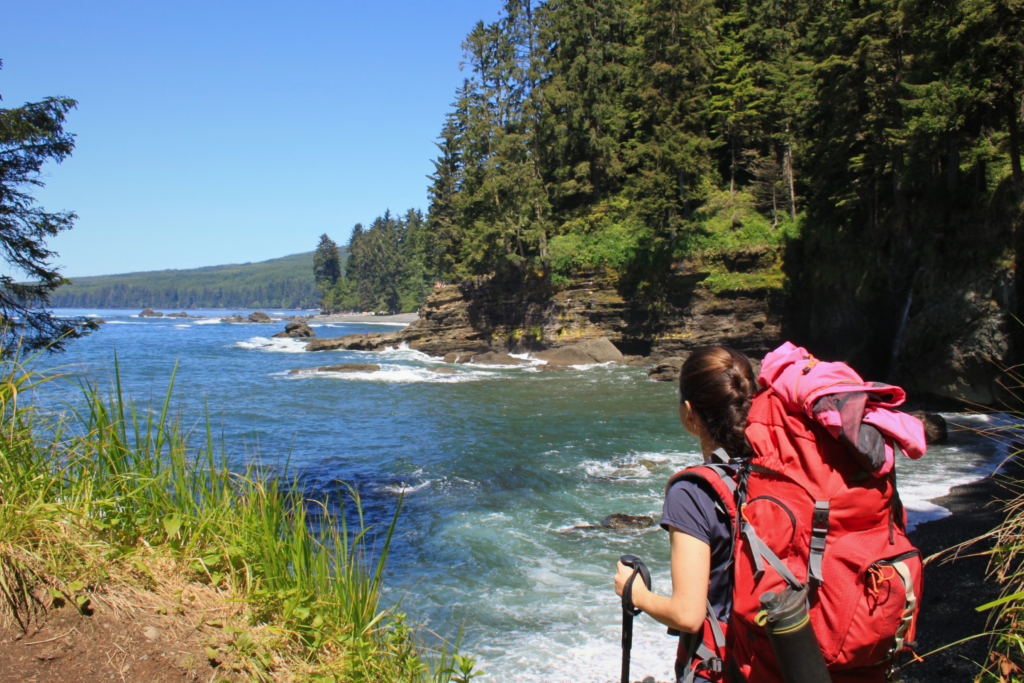
The Juan de Fuca Marine Trail on Vancouver Island is one of my favourite multi-day hikes in British Columbia. After hiking the entire 47 km from China Beach to Botanical Beach in 3 days, I can tell you that the trail does not disappoint. Whether you’re driving from Victoria (just 90 min away) or coming from Vancouver, this is a great way to spend a long weekend.
Compared to the West Coast Trail in Pacific Rim National Park Reserve, Juan de Fuca trail is more accessible, cheaper (no >$150 permit fee) and doesn’t require a lottery. Yet it still gives a similar coastal hiking experience.
If it’s your first time doing a multi-day backpacking trip on Vancouver Island, then Juan de Fuca is the perfect place to start. And if you’d prefer an easier trail, Cape Scott Trail in North Vancouver Island is worth looking into. Check out a comparison of both hikes here.
In this guide I cover everything you need to plan the Juan de Fuca trail in 3 days. From permits and campgrounds to shuttle logistics, trail difficulty and a day-by-day breakdown, you’ll find all this information below.
Snapshot of Hiking Juan de Fuca Trail in 3 Days

Things to Know: Hike the Juan de Fuca Trail
- Latest conditions: Check the BC Parks website before you go for the latest conditions and closures. Juan de Fuca will reopen on July 1, 2026 after it remained closed for over a year due to storm damages.
- Wildlife: Wildlife encounters along the Juan de Fuca trail are very common, especially bears. If you see a bear, stay calm and back away while keeping your eyes on the bear. Always carry bear spray and know how to use it in case of emergency.
- Trail conditions: Depending on the time of the year, some sections can be particularly muddy and wet. Carry gators if necessary. In case of heavy rains, creeks may be difficult to cross.
- Juan de Fuca trail difficulty: you should expect a rooty and muddy terrain, with some ladder sections and stony beaches. It’s not an easy hike but definitely doable with enough preparation.
- Water sources: most campground along the trail have streams and creeks nearby where you can filter fresh water.
- Mobile signal: is patchy and in some cases you may get connected to US carriers.
- Bear-proofing: At the main campsites along the trail, there will be bear-proof caches to store your food. But, in case these are full or not available, bring a bear canister with you. Please, always pack out what you packed in and do not leave garbage in pit toilets. Food smell attracts bears!
- High Tides: At high tide, some sections of the Juan de Fuca trail, like Sombrio Beach, are impassable. At trailheads, you can find tide tables you can reference to. Alternatively, you can get them at local bookstores.
- Safety: always share your itinerary with family or friends before heading out.
How to Get to the Juan de Fuca Trailhead
To access Juan de Fuca trail, there are four main trailheads accessible from Highway 14: China Beach, Sombrio Beach, Parkinson Creek and Botanical Beach. If you plan on completing the entire 47 km multi-day hike, I recommend to either start at China Beach or Botanical Beach.
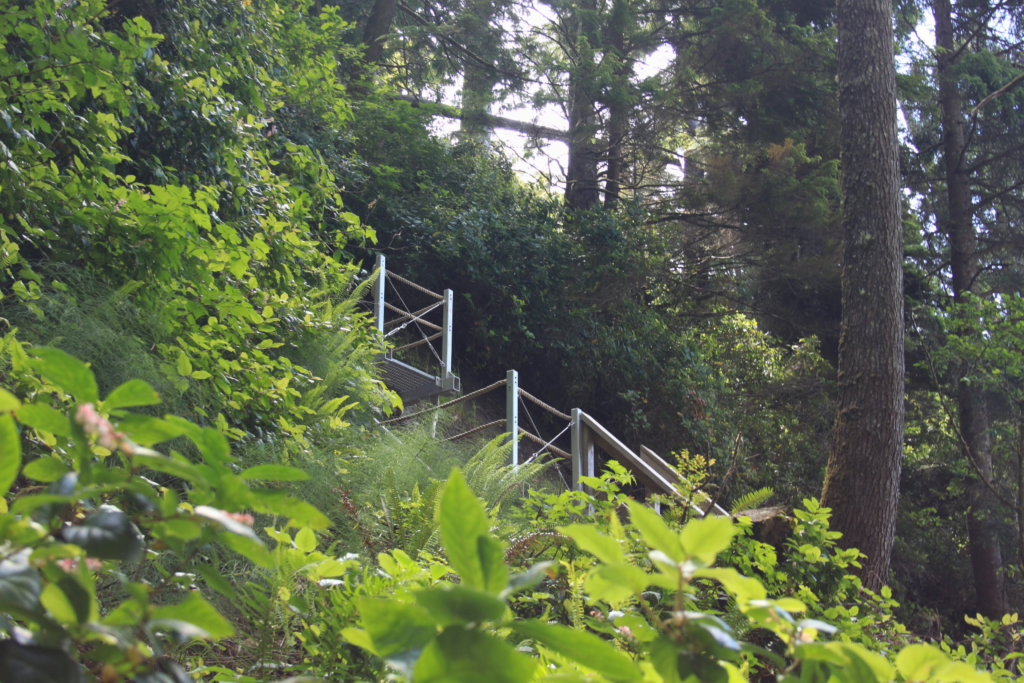
We personally decided to hike from east at China Beach and finish on the west at Botanical Beach. Since we did the Juan de Fuca trail in 3 days, our goal was to cover the most challenging sections at the beginning of the hike.
By Car
If you’re driving from Vancouver to Vancouver island, you’ll need to take a ferry from Tsawwassen to Swartz Bay first. In summer and around long weekends, I’d recommend having a ferry reservation to avoid long waiting times. Once you arrive in Swartz Bay, drive south to Victoria. Then take Highway 1 west to merge later on on Highway 14 west to Sooke. From here, follow the signs to China Beach campground and enter the Day Use Parking Lot.
If you decide to start at any other trailheads, continue on Highway 14 until you see signs for Sombrio Beach, Parkinson Creek or Botanical Beach. Also, if you have two cars, you could leave one car at the start and one at the end of the trail. This way you can get back without having to wait on a shuttle bus or taxi.
The parking lots at each official trailhead have free parking but on long weekends they fill up fast. Also, since break-ins are possible, do not leave anything valuable in your vehicle.
Juan de Fuca Trail Shuttle Reservation
If you don’t have a car or prefer using public transportation, West Coast Trail Express runs a shuttle bus service between Victoria and all trailheads for the Juan de Fuca Trail. It runs once a day in each direction between May and September. Every day, the Juan de Fuca trail shuttle bus leaves Victoria around 6:45 am and returns back in Victoria around 7:45 pm. Check the schedule for all the details.
If you start in Victoria, you’ll reach China Beach by around 8 am, which is ideal for an early start. On the way back, if you finish at Botanical Beach you’ll have to walk an additional 3 km to reach the stop on the highway by 5:45 pm.
Taxi Ride
Taking a taxi to or from the trailheads of Juan de Fuca is another option. Orange Cab in Sooke offers transportation and fixed prices to/from each trailhead.
For example, from Sooke to China Beach it costs $120, while from Botanical Beach to Sooke is $180. If you find other hikers that are looking to split the route, this could be a cheap way of sharing costs.
Hitchhiking
Hitchhiking between the trailheads of Juan de Fuca is not technically legal but a viable option. Of course, only if you find someone willing to bring you back to your car.
We had to resort to this option at the end of the trail but it wasn’t as easy as we thought. Luckily, a lady that noticed us on the trail, was kind enough to bring us closer to where we left the car. What we learnt the hard way is that hitchhiking usually means long waiting times and a good amount of luck.
How Many Days to Hike the Juan de Fuca Trail
Although we completed the Juan de Fuca trail in 3 days, I recommend putting aside at least 4 days. The reason for it is that Juan de Fuca is a challenging hike with steep sections but breathtaking coastal landscapes.
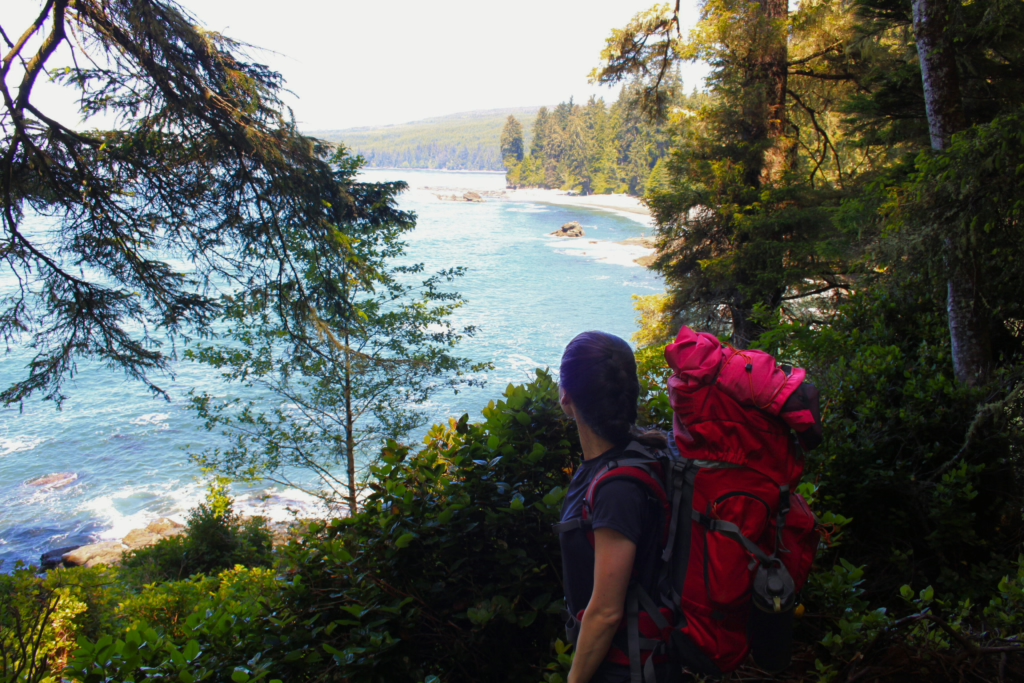
If you want to fully enjoy the experience, you should schedule some time for relaxing at the beach after a long day of hiking. We only did the trail in 3 days because we didn’t have any extra time.
But if you’re a fast hiker or do trail running, you can complete the Juan de Fuca trail in 3 days or less.
For comparison, the Berg Lake Trail backpacking trip in Mount Robson Provincial Park can also be done in 3 nights, but instead of coastal rainforest you’ll be surrounded by alpine glaciers.
Best Time to Hike the Juan de Fuca Trail
The best time to hike the Juan de Fuca Trail is usually between April and October, when the risk of rain is lower. But, keep in mind that if you plan on taking the West Coast shuttle bus connector between trailheads, this only operates between May and September.
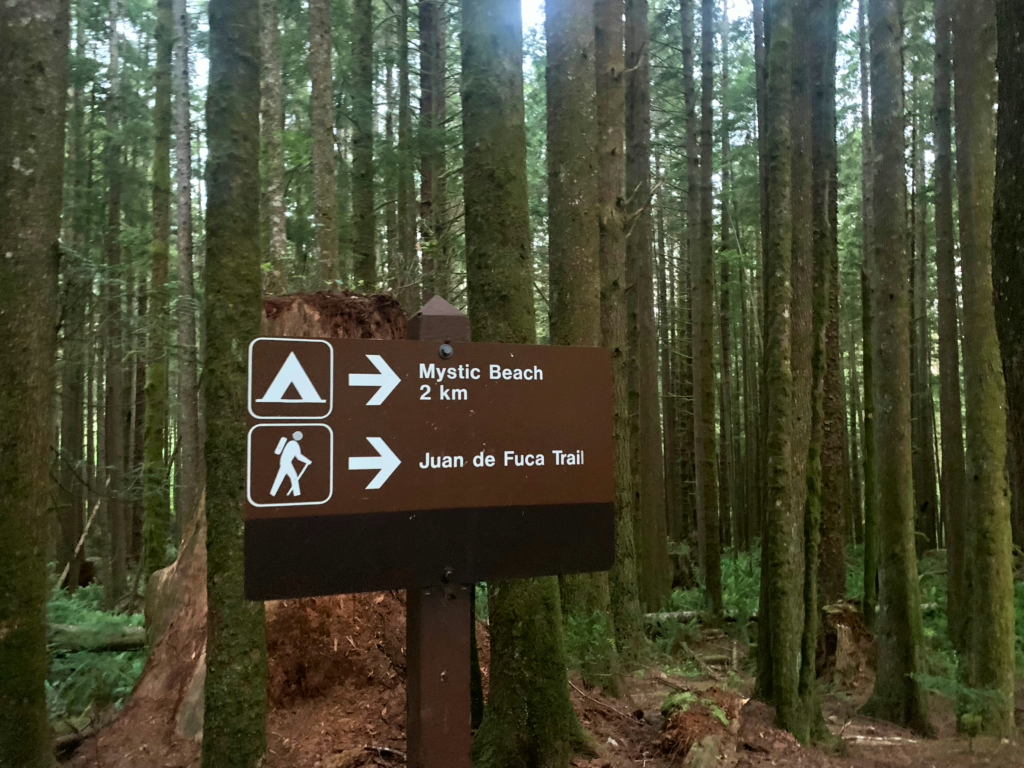
Outside of this time, Mystic Beach is open year-round and is a great day hike option. So even if parts of the Juan de Fuca are closed, you can still get down to the beach for an easy hike.
Which Direction to Hike the Juan de Fuca Trail
When hiking the Juan de Fuca trail, you can decide to go north to south (Botanical Beach to China Beach) or south to north (China Beach to Botanical Beach).
The argument to start in the north at Botanical Beach and hike south to China Beach is that once you reach the more difficult part of the trail (between Chin and Bear Beach) your backpacks will be lighter. Therefore, you’ll have to carry less weight through the steeper sections.
If you prefer to tackle the most difficult part of the trek at the beginning, I recommend starting in the south at China Beach. This is what we’ve done. Although we covered the most difficult section with heavier backpacks, we were glad to have tackled the steep sections first.
Juan de Fuca Trail Permit & Camping
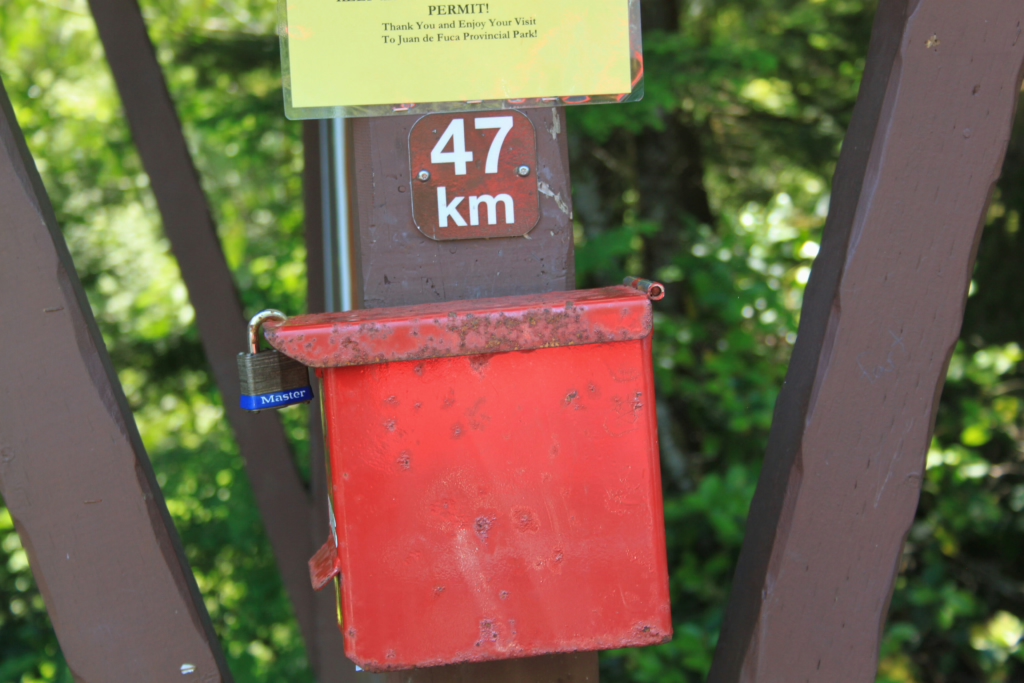
If you want to camp along the Juan de Fuca Trail, you’re need to purchase a backcountry camping permit. You can either get one online through BC Parks Camping or by depositing your camping fee at the self-registration box located at each trailhead.
You can only register online 14 days before your check-in date. The cost for an adult is $10 per person, per night. But, if you’re coming from outside British Columbia, starting in 2026, there is an additional surcharge of $20 per adult/night.
Juan de Fuca Trail camping is spread across 6 main sites (4 with beach access and 2 in the forest). I’ve also pinned each on the map above.
Campground | Distance from China Beach | What to Expect |
|---|---|---|
Mystic Beach | 2 km | Beach campsite, close to trailhead |
Bear Beach | 9 km | Beach campsite, large creek nearby |
Chin Beach | 21 km | Beach campsite, check tide times |
Sombrio Beach | 27 km | Beach campsite, busy on weekends |
Little Kuitsche Creek | 33 km | Forest campsite |
Payzant Creek | 40 km | Forest campsite, river and waterfall |
Section Breakdown: Juan de Fuca Trail in 3 Days
Although we’ve hiked Juan de Fuca trail in 3 days, it is best done in 4 days. Generally, the trail from Bear Beach to Chin Beach is the most difficult section. Despite it not being technically difficult, the several short but steep hills followed by uneven terrain, trees blocking the path and mud, turn it into a very long and hard day.
Below I break down our itinerary of hiking Juan de Fuca trail in 3 days. Additionally, I include useful tips on how to tackle each section and where you can add an extra day to the Juan de Fuca trek.
Day 1: China Beach – Mystic Beach – Chin Beach
Campground: Mystic Beach (the night before) and Chin Beach
Distance: 19 km
Difficulty: Most Difficult
Elevation Gain: 893 m
Starting from China Beach on Vancouver Island’s southwest coast, follow the directions to Mystic Beach. After about 1 hour, you’ll reach the beach and the campsite. Here, you can camp on the beach directly or on the tent sites tucked into the forest, on the east side of the trail. But, be cautious of pitching your tent on the beach when tides are high.
We arrived late in the evening and spent the night at Mystic Beach. This way we were able to start early the next day.
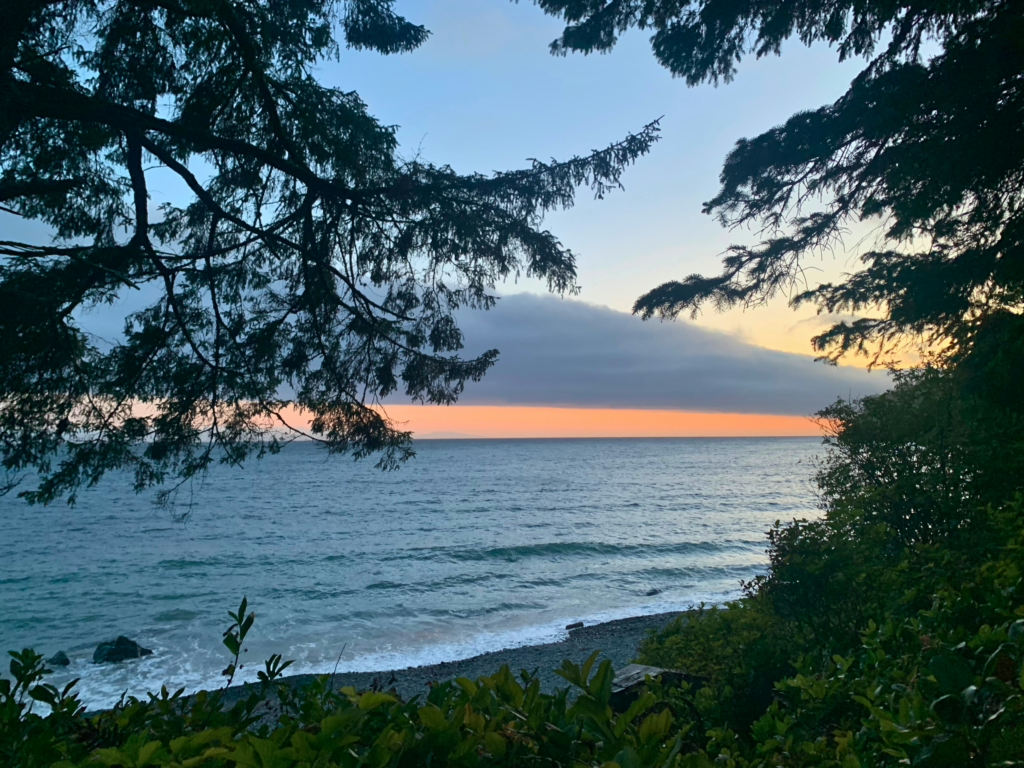
The section from Mystic beach to Bear Beach follows the coastline, opening up at some viewpoints over the ocean. Overall, the trail climbs uphill and descends downhill multiple times, before reaching Bear Beach by means of a ladder.
Bear Beach is one of the longest beaches on the Juan de Fuca trail. Since it’s quite rocky, watch out your footsteps to avoid twisting your ankle.
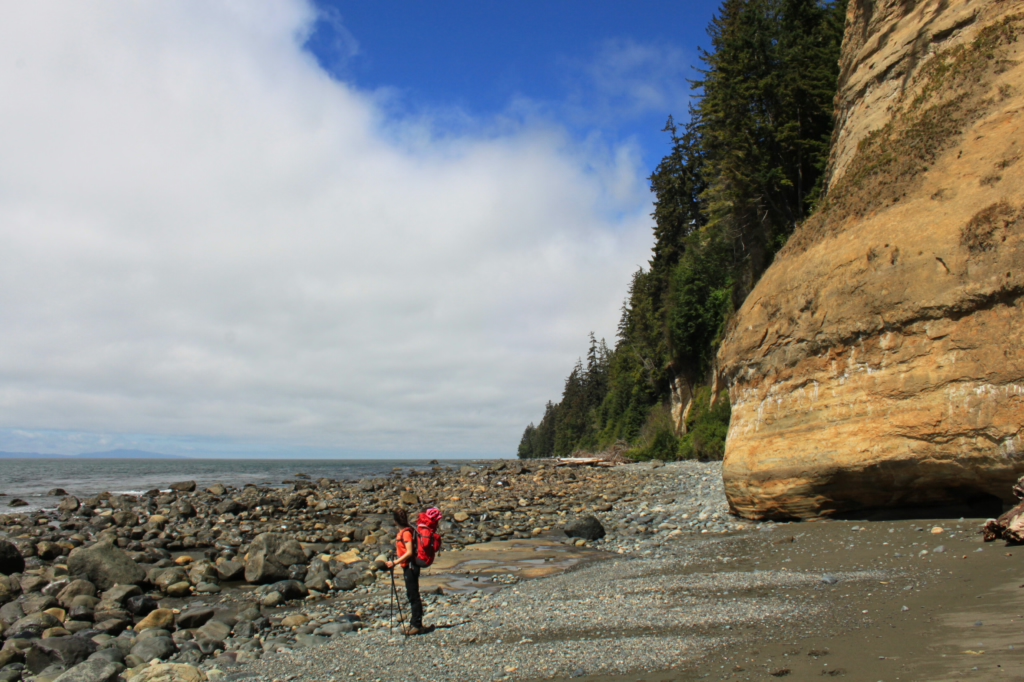
The Bear Beach to Chin Beach section is where the Juan de Fuca trail difficulty really shows itself. Here is when we really regretted committing to doing the Juan de Fuca trail in 3 days. What killed us the most was the expectation of being close to the campground but having to re-estimate the distance after each uphill and downhill.
As soon as we reached the campground at Chin Beach, we went straight to bed. Before your descent to the beach, you’ll come across some tent pads. But if you prefer camping on the beach, you’ll find a few flat surfaces for your tent.
Day 2: Chin Beach – Payzant Creek
Campground: Payzant Creek
Distance: 19 km
Difficulty: Moderate
Elevation Gain: 410 m
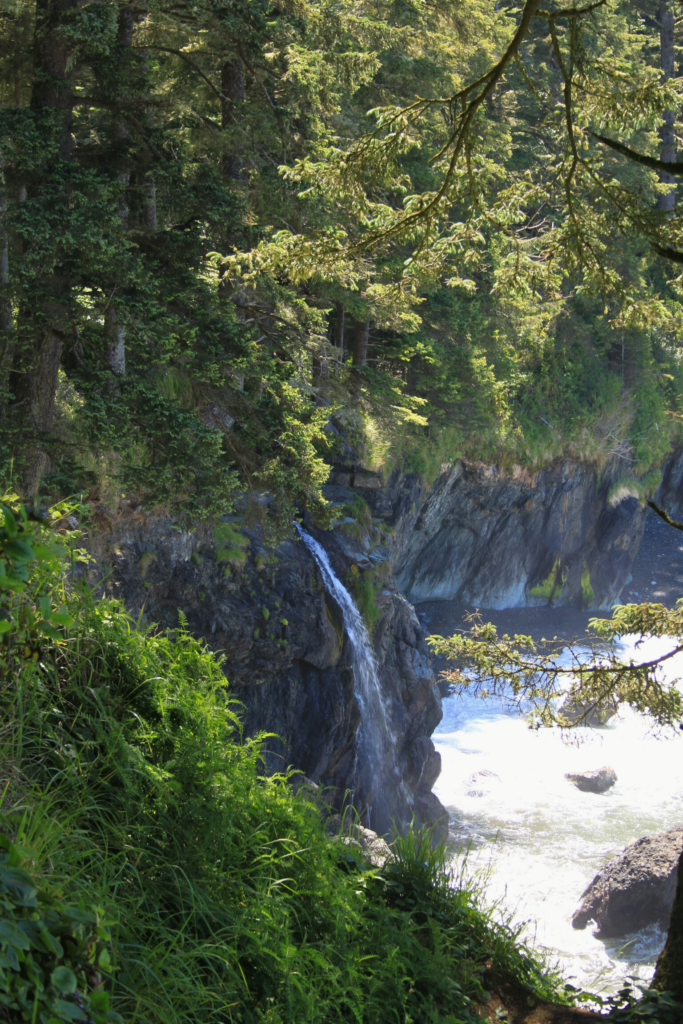
The section between Chin beach and Payzant Creek was my favorite along the Juan de Fuca trail. You’ll climb steep hills and cross a creek through the suspension bridge, but you’ll come across some of the best views on the entire trail. The closer you get to Sombrio beach, the more magical it gets.
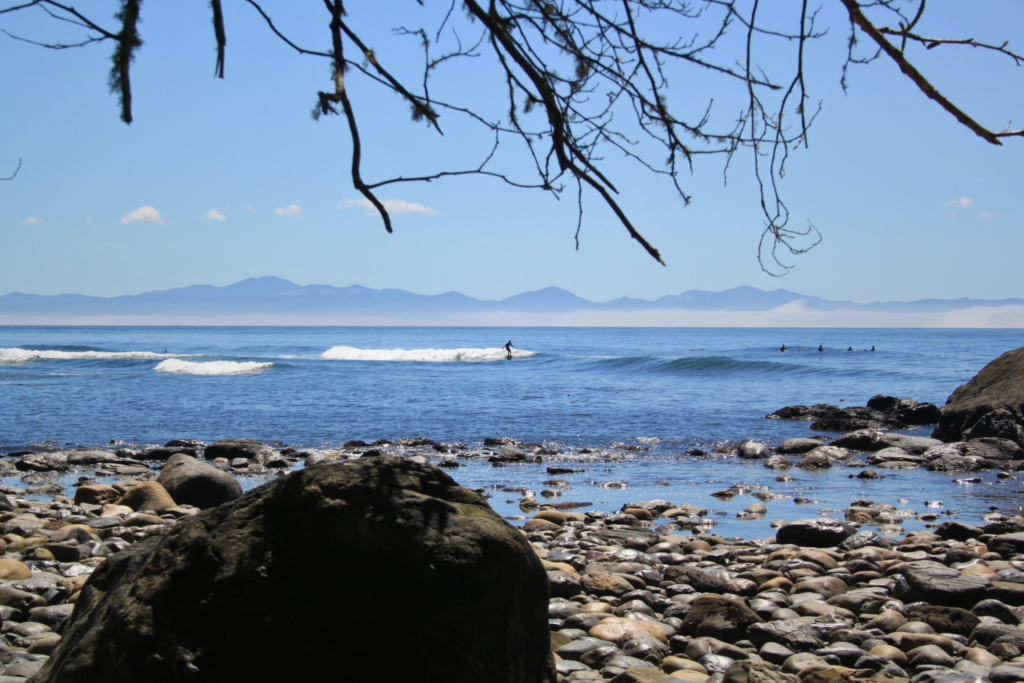
Sombrio Beach is a wide coastline popular with surfers. Since you can access the beach from the main road, you’ll likely always spot a few out in the water at anytime.
At Sombrio Beach, your route depends on the tides. At low tide you can follow the beach but at high tide, you’ll need to take the upper forest route instead. Either way, both paths lead to Payzant Creek campground. Check the tide table at the beginning of the day for more insights.

Day 3: Payzant Creek – Botanical Beach – Port Renfrew
Distance: 10 km
Difficulty: Easy
Elevation Gain: 100 m
The last section of the Juan de Fuca trail is in my opinion the easiest. Not only is the trail very well maintained, but the wooden boardwalks make it very easy to traverse.
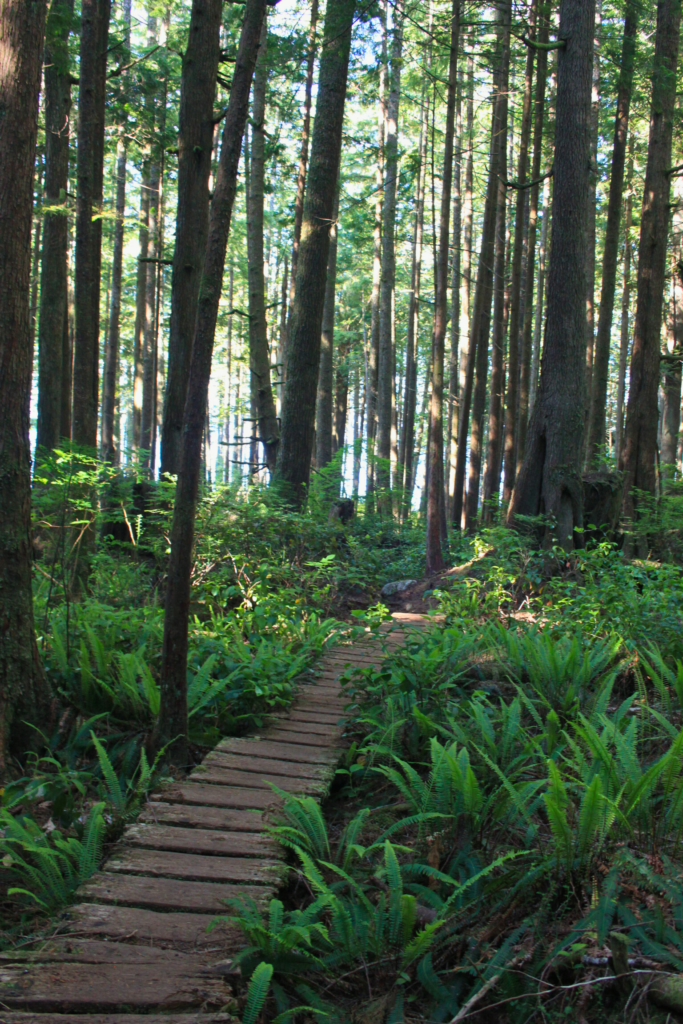
Completing the Juan de Fuca trail in 3 days and seeing the end marker was an incredible feeling. Before you leave, spend some time at the Botanical Beach tide pools. At low tide, you’ll be able to spot some of the richest tidal ecosystems on the BC coast, from sea urchins to starfish, anemones and starfish.
Botanical Beach tide pools are also a popular day trip on Vancouver Island, so you’ll meet many more people than on the trail.
Once you’re ready to leave, if you’re looking for a well-earned meal check Renfrew Pub in Port Renfrew. From there you can catch the West Coast Trail Express shuttle back to Victoria or China beach.
If you have some extra days on your trip and want to fully relax, you can spend 3 days in Tofino.
📌 Save this Article on Pinterest for Later!


