

Canada Travel Guide When Visiting For The First Time
Planning a trip to Canada? This Canada travel guide covers all the essential tips to help you plan your trip. Canada is vast, and if it’s your first time visiting, you’ll quickly realize just how much there is to see and do. In fact, it’s nearly impossible to explore the entire country in one visit, but with this guide, I’ll help you make the most of your time and plan accordingly.
In this Canada travel guide you’ll find practical travel tips, best places to visit based on your interests, budget hacks, experiences in Canada you shouldn’t miss and itinerary ideas to make the most of your trip.
Don’t Have Time to Read the Entire Post?
Here are the main highlights and most important takeaways:

Things To Know Before You Travel To Canada
1. How To Choose When to Travel to Canada
Before you book any tickets, choosing the best time to travel to Canada is essential to making the most of your trip. Canada is a vast country with very different climates and experiences throughout the year, so the ideal travel season depends on what you want to do, where you plan to go and your travel budget.
In this Canada travel guide, I break down the four seasons to help you choose the best time of the year for your trip.
SPRING
(March – May)
SUMMER
(June – August)
FALL
(September – October)
WINTER
(November – March)

When to Go to Canada Based on Your Travel Goals
|
Activities |
Best Time to Visit |
|---|---|
|
Hiking and national parks |
June to September |
|
City breaks |
Year round, but best May to October |
|
Northern lights |
September to March |
|
Skiing and snowboarding |
December to March |
|
Road trips |
June to September |
|
Wildlife |
May to October |
|
Fall colors |
September to October |
2. Entry Requirements & Visas
Before you travel to Canada, find out if you need a Visa or an eTA (Electronic Travel Authorization). Check out this list to find out if your country is eligible for an eTA.
Most of the countries, such as UK, Australia, Japan, South Korea and European Union only require an eTA, which allows stays of up to 6 months per visit. It is easy to apply online, costs only CAD $7 and is valid for up to 5 years.
If your country does not belong to the visa-exempt list, you’ll need to apply for a temporary visitor visa.
3. Travel Insurance
Although travel insurance is not mandatory for visitors, I highly recommend getting one to avoid any unexpected surprises in case of emergency.

When looking for a travel insurance, make sure it covers:
- Medical emergency costs: such as hospital stays, doctor visits, ambulance services and prescription drugs. This is especially important if your trip involves skiing or any outdoor activity.
- Emergency evacuation and repatriation
- Trip cancellation or interruption: can become useful if your trip gets cancelled due to weather.
- Baggage and personal items: it should cover any lost or stolen luggage as well as purchases bought during delays.
- Personal liability: is often overlooked but becomes very important if you injure someone or damage a property.
4. Time Zones
Canada is the second largest country in the world, after Russia, and spans over 6 time zones.
- Pacific Standard Time (PST) applies to major cities, such as Vancouver and Victoria.
- Mountain Standard Time (MST) is used in Calgary, Edmonton and Banff areas.
- Central Standard Time (CST) is relevant for cities, such as Winnipeg and Regina.
- Eastern Standard Time (EST) applies to Toronto, Ottawa, Montreal and Quebec City.
- Atlantic Standard Time (AST) includes New Brunswick, Nova Scotia and Prince Edward Island.
- Newfoundland Standard Time (NST) is used in Newfoundland and Labrador.
5. Renting a Car in Canada

Below I provide an overview of how to rent a car in Canada. Although renting a car in Canada is relatively straightforward, there are a few things to know before your trip.
- Valid driver’s license: foreign licenses are accepted as long as they’re in either English or French. If that’s not the case, you may need an International Driving Permit (IDP) on top of your regular license.
- Auto insurance: is mandatory for any vehicle you rent.
- Many credit cards provide rental car insurance but be sure you contact the rental company in advance to confirm which documents are required. In some cases, you need to request an additional document from your credit card provider as proof of coverage.
- Book in advance to secure a better rate.
- In Canada you drive on the right side of the road, same as in the US and the European Countries.
Major rental companies are: Hertz, Enterprise, Avis, Budget, National, Alamo and Thrifty.
6. What To Pack: General Packing Tips

What you pack for Canada depends on when and where you go, as well as what activities you want to do. Below, in this Canada travel guide, I’ve put together a general list of items to pack for different seasons and activities in Canada.
- Layering: make sure you bring merino wool base layers to keep you warm at all times.
- Comfortable shoes: especially for outdoor activities in Canada, be sure to pack sturdy shoes.
- Down jacket: I often use one even in summer, when hiking and camping at higher altitudes.
- Wind jacket: you can never go wrong with one and it doesn’t usually take much space anyway.
- Sun cream: although Canada has low temperatures, sun cream is always a must.
- Hat: I always have one to protect against chilly winds.
- Bug repellent: very important if you’re heading into the backcountry or exploring any trails in Canada in summer. Mosquitoes and bugs are very common in the summer months (and very annoying)!
- Travel adapter: Canada uses Type A/B plugs but I’d recommend investing in an international adapter to use on all of your trips.
7. Common Mistakes to Avoid When Visiting Canada for the First Time
Canada is one of the most beautiful countries in the world and visiting it for the first time is an exiting experience. But as with any new destination, there are some common mistakes you can avoid to make the most of your trip:
- Do not underestimate distances in Canada. For example, to drive from Vancouver to Toronto it’s over 4,000 km (2,500 miles). So, I’d recommend to focus on a specific area of the country, have a route in mind and give yourself plenty of time for a long road trip.
- Buy an eSIM card before you fly to Canada to remain in touch with your beloved ones. Phone plans are very expensive in Canada and there are multiple eSIM companies offering data for a reasonable price.
- Reserve campsites at popular national parks early. Some reservations open as early as December and others start on a rolling basis 4 months prior to your arrival date. It’s a very competitive process and I’d recommend being on the websites’ page as soon as the booking window opens up. Some of the most popular websites are Parks Canada and BC Parks.
- Do not forget about travel insurance as medical care can be very expensive for tourists without insurance.
- Remember to include taxes. In fact, in Canada, retail prices do not include taxes, which are added at checkout. So if an item initially seems cheap, be sure to factor in the additional tax before making your purchase.
- Summer in Canada is not like summer in Europe. As mentioned before, weather in Canada is unpredictable so you always need to dress in layers and have a jacket with you, especially if you’re heading to higher elevations.
- Be aware of wildlife especially in national parks. Bears, moose or wolves are more common than you think. So you need to know what to do in case of an encounter and keep a safe distance. I know, I know, sometimes the excitement takes over, but don’t approach and never feed wildlife.
Best Places To Visit in Canada For First Timers
If it’s your first time in Canada, I would recommend a classic 2 or 3 week Western Coast road trip that covers Vancouver and the Canadian Rockies. In this Canada travel guide, I also include itineraries based on your desired length.
1. Vancouver and the Canadian Rockies
Best Itineraries from Vancouver


Best City Breaks from Vancouver


Best Itineraries for Outdoor Lovers


Best Hiking and Backpacking Trips




2. Vancouver Island
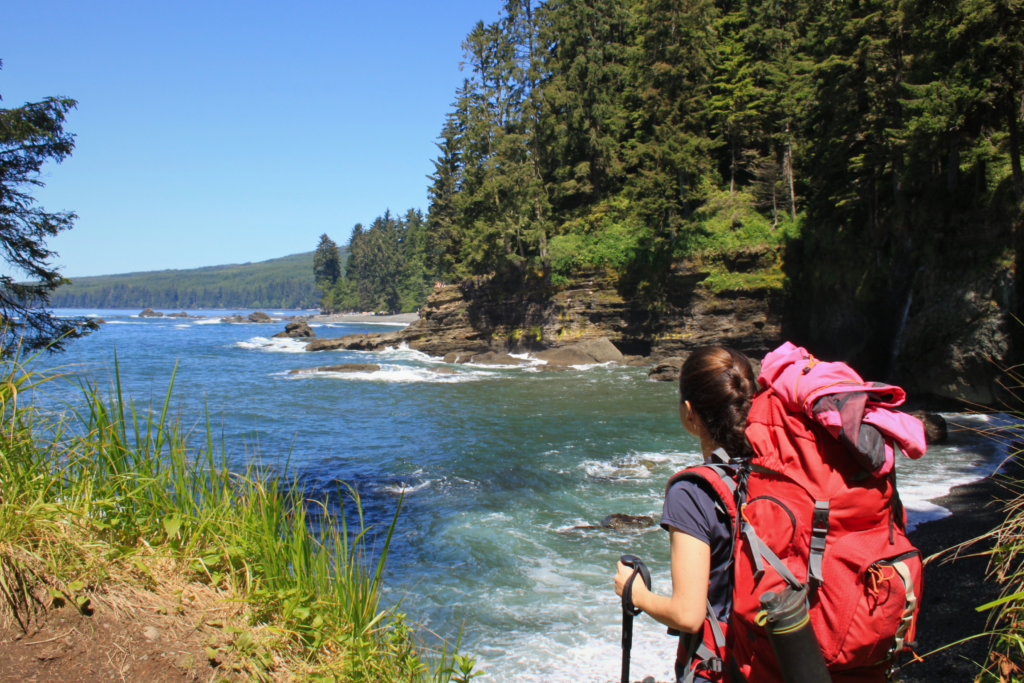
Vancouver Island is one of my favorite places in Canada, offering a true sense of the country’s wilderness. Here, I surfed in the Pacific Ocean, camped while sea wolves roamed the beaches, hiked to breathtaking heights and visited the second-oldest Chinatown in North America.
In this Canada travel guide, I’ve listed all the articles that cover these experiences:

3. Banff & Jasper National Parks
Banff and Jasper National Park are among the oldest and most popular national parks in Canada. Although they attract a lot of tourists every summer, it’s also undoubtedly one of the most beautiful areas in Canada. Learn how to plan a Canadian Rockies itinerary and choose between the following blog post for a deeper dive:


4. Toronto & Niagara Falls

Toronto is Canada’s largest city, known for its CN Tower where you can get scenic views over the city from above. But one of the main reasons people visit Toronto is to see Niagara Falls. In fact, there are many day tours from Downtown Toronto that allow you to see the massive waterfalls on a boat tour.
5. Montreal and Quebec City
If you want to learn more about the French-Canadian culture, Montreal and Quebec City are the perfect destinations. Visit in summer for festivals or in fall for the stunning fall foliage. Also if you’re looking for a touch of the European historical atmosphere, including cobblestone streets and old buildings, you should add these cities to your list.
6. Ottawa
Ottawa is Canada’s capital city and is the perfect destination for those that want to learn more about the political background in Canada, visit Parliament Hill or see national treasures like the National Gallery of Canada.
7. Atlantic Canada (Nova Scotia, PEI, Newfoundland)
These regions of Canada are less popular but have some stunning landscapes and vibrant harbour towns. Here, you can explore remote areas of Canada, visit several lighthouses along the coastline or take scenic drives.
8. Yukon and Northwest Territories

I visited Yukon twice already and cannot wait to go back soon again. Whitehorse it the gateway to the Kluane National Park, where you can hike or spot wildlife and some of the more remote landscapes in Canada. This area is best known for the Gold Rush History, the wilderness and the northern lights.
Another great spot for northern lights is Yellowknife, which is part of the Northwest Territories. This town benefits from perfect geomagnetic fields and is one of the best places for aurora borealis in Canada.
Practical Travel Tips for Canada
1. How to Get Around Canada
When visiting Canada, your transportation options will vary depending on where and when you’re traveling. In this Canada travel guide you can find an overview of how to get around Canada and what you should know before your trip.
Driving in Canada
If you’re considering to rent a car in Canada, you should be ready to cover long distances. The good news is that roads in Canada are generally in good condition and most highways are well-maintained. But I would recommend to always check road conditions before your road trip and be prepared for changing weather.

CAR RENTALS – rent a car from major international airports or downtown areas to be flexible while exploring Canada. Compare prices among major rental companies such as Enterprise, Hertz, Budget, Avis and National for the best rates.
RV RENTALS – can be quite expensive depending on the season, location and type of RV. But it’s the ideal means of transportation if you don’t want to stay at major resorts on your trip. If you’re visiting national parks, such as Banff and Jasper, make sure you book campsites in advance for the summer months.
Domestic flights
If your trip to Canada focuses on cities, such as Toronto, Vancouver, Montreal and Calgary in one itinerary, domestic flights are the most efficient way to save time.
The major national airlines in Canada are WestJet, Porter Airlines and Air Canada. Some of the flights might take about 5 to 6 hours (Toronto to Vancouver), while others can be around 1 hour (Vancouver to Calgary).
Trains (Via Rail)
Trains in Canada are not as popular as in other parts of the world, such as in Europe. In fact, it’s often very expensive and involves multiple days of travel.
Via Rail network is the major train service in Canada and offers some popular routes, such as Toronto to Montreal, Vancouver to Toronto or Winnipeg to Churchill.
For an even more luxurious experience, you can book with the Rocky Mountaineer. They offer some scenic train rides between Vancouver and Banff or Jasper. But this trip is not for every budget as tickets are quite expensive.
Buses (Intercity Options)
Bus travel in Canada can be slow but it’s often cheaper than flights or trains. In fact, there are many bus companies such as Greyhound, Megabus and Ontario Northland that offer long-distance connections between major cities in Canada.
Ferries (Coastal Areas)

If you’re visiting areas, such as Vancouver Island, Newfoundland or Prince Edward, you’ll need to take a ferry. When I travel to Vancouver Island, I make sure to book ferry tickets in advance, especially when traveling with a vehicle in the summer months.
In fact, without a reservation you may be placed on standby and have to wait for the next available ferry. To avoid delays, if you already know your itinerary, I highly recommend reserving a ferry ticket in advance.
Some useful links for ferry reservation in Canada are:
- BC Ferries: Western Canada ferry, connecting Vancouver with Vancouver Island, Sunshine Coast and the Gulf Islands.
- Marine Atlantic: between Nova Scotia and Newfoundland.
- Ferries.ca: covers routes in Eastern Canada.
2. How to Visit a National Park in Canada
Canada has over 40 national parks but you’ll need to narrow it down to a selected few on your first visit. Below I’ve put together a short Canada travel guide on how to visit national parks in Canada.

WHICH NATIONAL PARKS TO VISIT – if it’s your first time visiting Canada, I’d recommend visiting at least Banff, Jasper and Yoho National Park in the Canadian Rockies. They can be easily seen on one trip. But if you’re also traveling to Vancouver Island, you should add Pacific Rim National Park Reserve to your list.
There are also some more remote national parks that don’t receive as many tourists, such as Kluane National Park and Reserve in the Yukon or Gros Morne National Park in Newfoundland and Labrador.
ENTRY FEES – national park fees in Canada vary but they typically range from CAD $7 to $20 per adult for a daily park entry. If you plan to visit more than one national park, I recommend purchasing a Discovery Pass, which gives you unlimited access year round for about CAD $72.25 per adult. Some parks also offer free admission on certain days, which you can check before your trip.
WHAT TO DO IN A NATIONAL PARK – the most popular activity is hiking, either as a day hike or a multi-day backpacking trip. You’ll come across some of the most scenic views, such as Lake Louise from the Big Beehive, Parker Ridge along the Icefields Parkway or Lake O’Hara in Yoho National Park.
Some additional activities in a national park include scenic drives, such as the Icefields Parkway, camping in the backcountry or wildlife watching.
3. What to Know about Camping in Canada
In Canada you can choose between backcountry camping and more developed campgrounds near major cities.

BACKCOUNTRY CAMPING – involves hiking or canoeing to reach the campsite and is often found in remote areas of national and provincial parks. These sites typically have minimal infrastructure and you’ll need to bring all your gear with you. To get a backcountry camping site, you’re required to book a permit online or at a park office. Some popular national parks use a lottery system for reservations during peak season.
DEVELOPED CAMPSITES – you can drive to them in your vehicle and do not have to hike to reach the campsite. These campsites usually have amenities, such as showers, flush toilets and electric hookups for RVs. I recommend booking a spot in advance through official websites, such as Parks Canada.
CAMPING PERMITS & RESERVATIONS – reserve your camping spot in advance if you plan to visit during peak season at official websites, such as Parks Canada, Ontario Parks.
WILDLIFE – when camping, it is essential to carry a bear spray with you and store food properly to avoid attracting wildlife. This also means that you need to store any odor items (including tooth paste) in a bear-proof container or bear cache. Do not leave food unattended and follow the Leave No Trace principles.
4. Budget Hacks
Traveling in Canada can be expensive, and you’ll quickly notice this when looking at accommodations in Vancouver or other major cities. However, with some advance planning and smart budgeting, you can prioritize the activities that matter most to you.
Below, I’ve put together some budget hacks to help you manage the high costs of traveling in Canada.
- Consider traveling in spring or fall, when weather is still great but there are less crowds and prices are lower.
- Buy a Parks Canada Discovery Pass, if you plan to visit multiple national parks which gives you access to all national parks and sites at a fixed fee for an entire year.
- Get a city pass when visiting major cities, such as Toronto, Vancouver and Montreal to get a discount on top attractions.
- Choose a mix of hostels, camping, Airbnbs and hotels to bring down the costs of accommodation. This way you can treat yourself to a comfortable stay in less touristy areas, while opting for camping or hostels in very expensive towns, such as Banff.
- Cook your own meals when you can or try to go out to places that offer lunch specials or happy hour deals.
5. Tipping Culture
While tipping is not legally required in Canada, it’s often expected in the service industry. Usually the minimum tip is around 18% but many restaurants apply an automatic gratuity to groups larger than 6.
Canadian Experiences You Should Try
If you choose a destination based on the kind of experience you can do, then Canada offers a lot of unique experiences to mark your holiday.
1. Ice Hockey Game


Ice hockey is not just a sport in Canada, it’s part of the culture. Even if you’re not a big sports fan, watch a match live to experience the energy in the arena and the fan passion. With some luck, the team you’re cheering for might even win.
2. Whale Watching

I was lucky enough to see a grey whale right from the sea wall in Vancouver. But there are plenty of opportunities to go whale watching in Canada. In fact, there are many companies especially on Vancouver Island that offer daily boat tours. So, why not combine it with a trip to Victoria and Tofino?
3. Indigenous Cultural Experiences
You can book an Indigenous owner and operated experience across Canada to learn about the traditional ceremonies, language and culture.
There are also many museums and heritage centers across the country that offer a glimpse into the First Nations history.
4. Scenic Train Rides
If you’d like to experience Canada from the comfort of your seat, then a scenic train ride on the West Coast in Canada or a cross-country experience might be the right pick for you. Below are some of the main scenic train routes in Canada.
5. Maple Syrup Experiences
Did you know that Canada produces about 70% of the world’s maple syrup? So having a maple syrup experience in Quebec is a truly Canadian experience. Visit a sugar shack in spring and watch how maple syrup is produces. Or enjoy a maple taffy on snow for an even more authentic experience.
6. Canoeing and Kayaking

When it comes to canoeing and kayaking, Canada offers endless options. From the Broken Group in the Pacific Rim National Park Reserve to canoing on Maligne Lake in the Canadian Rockies, you can choose from easy day trips to multi-day kayaking routes.
7. Backpacking Trip in the Canadian Wilderness

This is my absolute favorite experience in Canada. You don’t need to go too far to see some of the most beautiful nature in Canada. The more popular areas for backpacking are in Banff and Jasper National Parks, as well as Garibaldi Provincial Park or other areas in British Columbia. Head to my hiking page for more inspiration.
8. Surfing in Tofino

Surfing in the Pacific Ocean is a thrilling experience. You don’t need to be an expert to surf in Tofino and you can rent all the equipment you need from local rental shops. There are many beginner friendly beaches with shallow waters and gentle waves, perfect for anyone surfing for the first time.
Additionally, you can extend your itinerary in Tofino and check out the local hot springs, go storm watching or head out on one of the many boat tours.
9. Train Ride to Watch Polar Bears
If you’ve been dreaming of observing polar bears in the wild in complete safety, then this train ride will blow you away. The starting point is in Winnipeg, where you’ll embark a train to Churchill, the polar bear capital of the world. Here, you will then book a tundra buggy tour to spot polar bears in their natural habitat.
10. Experience Wolves in Parc Omega
Stay at one of the lodges in Parc Omega in Quebec and experience wolves walking and howling just meters away from your window. The chalets have floor-to ceiling glass with unobstructed views so that it feels like you’re in the nature while staying at a safe distance from the wolves.
11. Endless Daylight in Summer or Fall Colors in the Yukon

You don’t need to travel to Patagonia or Iceland to be surrounded by jagged mountains. In fact, Yukon has some of the most incredible mountains and landscapes I’ve seen in Canada. Head to Tombstone Territorial Park around end of August or early September for some of the most beautiful fall colors in the Yukon.
Itinerary Ideas For First Time Visitors in Canada
In this section of the Canada travel guide, I’m providing some itinerary ideas when visiting Canada for the first time. Obviously, the more time you have the more you can see but you can still make the most of a trip to Canada on a weekend trip. In this case, I’d recommend a city break holiday.
1-2 Day Itinerary: Weekend Trips in Canada

Spend a weekend in Vancouver, Toronto, Montreal or Banff and enjoy some of the local sights. Some of my short itineraries when you only have a weekend are:
3 to 5-Day Itinerary: Short City Trip or Escape in the Nature

7 Day Itinerary: Focus on a Specific Region

14 Day Itinerary: The Classic Canada Road Trip

2 weeks or 14 days in Canada is the ideal time to explore more extensively some of the most beautiful areas in the country.
21-30 Day Itinerary: A Month in Canada

With a month in Canada you can truly experience the country inside out. I would recommend a coast-to coast road trip where you slowly make your way from Vancouver to Toronto, or vice versa. In fact, in a month you can blend in some city breaks and well as hiking and other outdoor activities.


